02
Oct
2026
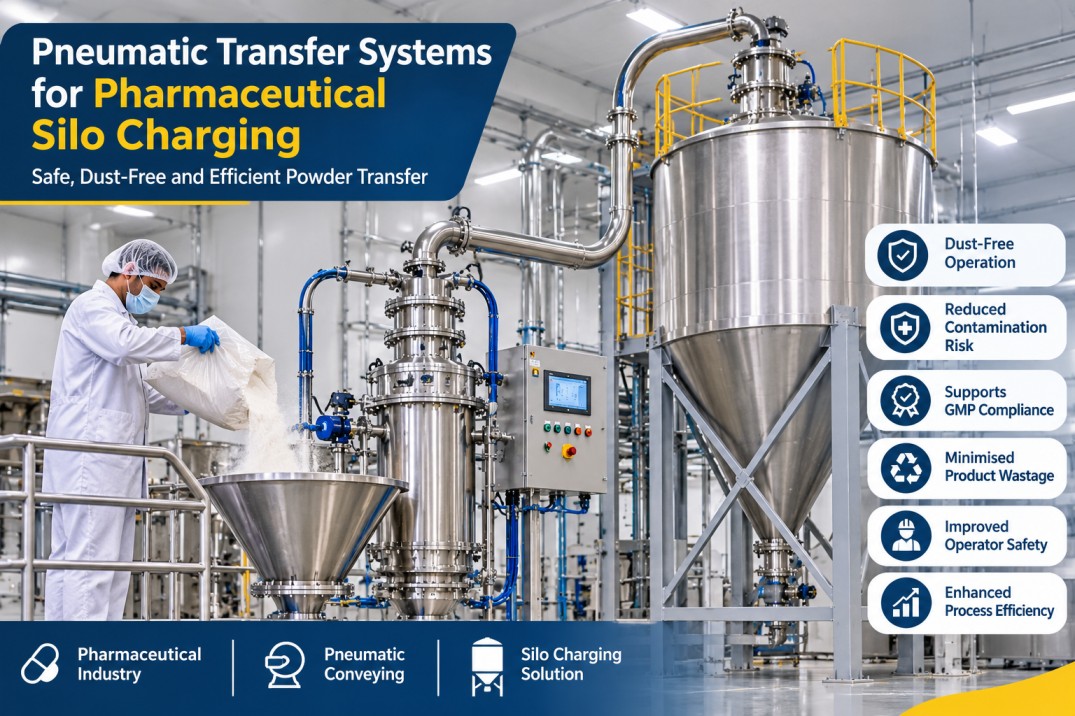
The pharmaceutical industry requires precise material handling, controlled production environments, and strict hygiene practices. Transferring powdered ingredients into storage silos can present challenges when the process relies on manual feeding, particularly when working at height or handling materials that require careful contamination control.
A Pneumatic Transfer System (PTS) provides an automated approach to moving suitable powders through enclosed pipelines. By reducing manual handling and supporting controlled material transfer, a properly designed system can help pharmaceutical manufacturers improve operational efficiency, maintain cleaner working environments, and streamline production workflows.
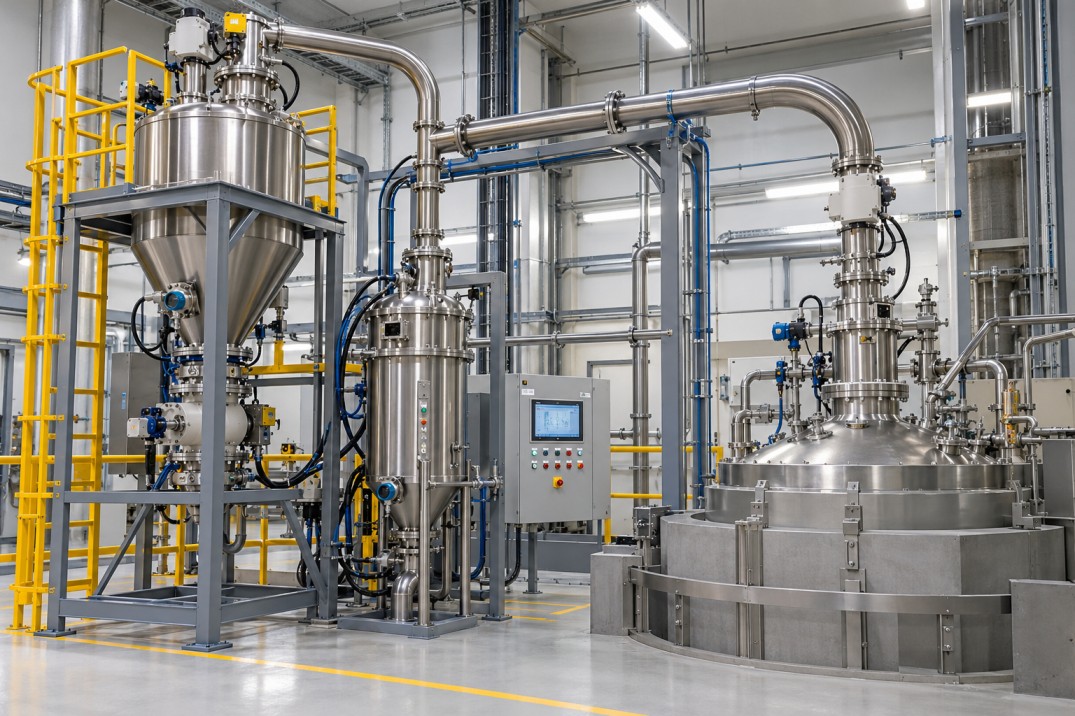
HIS Pumps & Systems supplied a Pneumatic Transfer System (PTS) for charging material into silos in a pharmaceutical manufacturing application. The solution was designed to support efficient powder transfer while integrating with the existing setup with minimal modification.
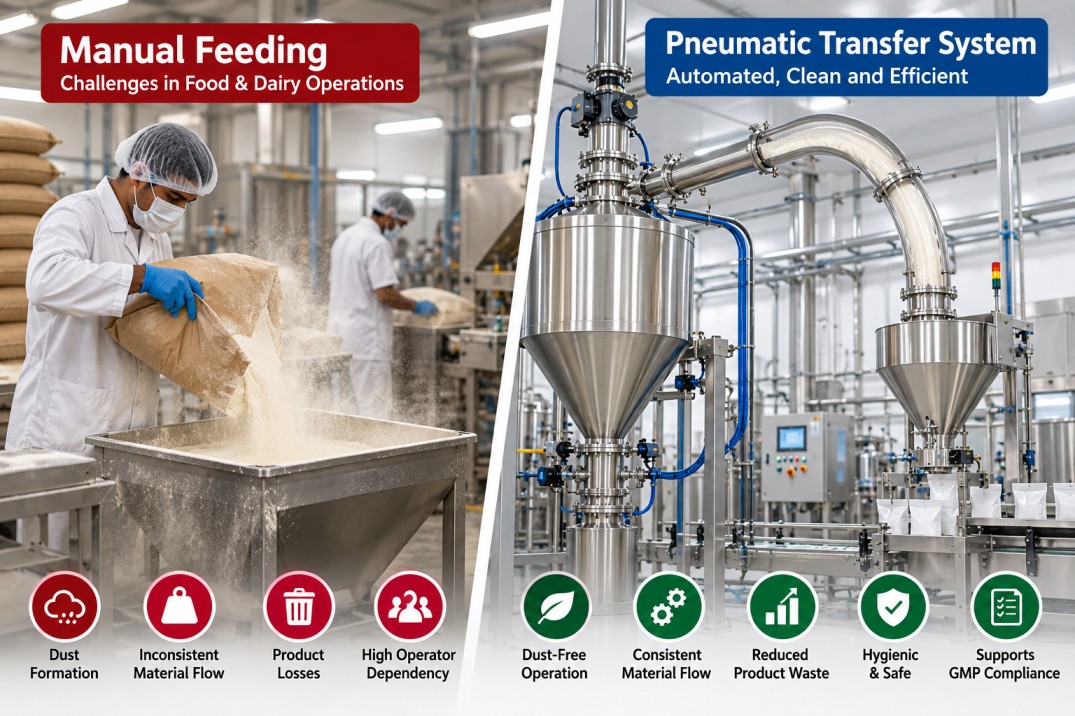
Charging pharmaceutical powders into silos requires careful coordination between material handling, production equipment, and hygiene procedures. When material is transferred manually, several operational challenges can arise.
Charging elevated silos manually can require operators to lift, carry, or pour materials at height. This may increase physical workload and create additional operational safety concerns.
An appropriately designed pneumatic transfer system can automate material movement between designated feeding points and silos, reducing the need for repetitive manual handling.
Handling fine pharmaceutical powders can generate airborne dust, particularly when materials are poured into open hoppers or transfer points.
Dust may create housekeeping challenges and increase the risk of cross-contamination if appropriate controls are not in place. Enclosed conveying can help reduce exposure to the surrounding environment during material transportation.
Manual feeding can result in material spillage around charging points, containers, and equipment.
These losses can increase cleaning requirements and affect material utilisation. Reducing open handling points can help manufacturers improve transfer efficiency and minimise avoidable product loss.
Manual charging may require additional operator time and repeated handling steps. These activities can interrupt production workflows and make it more difficult to maintain consistent material availability.
Automated powder transfer can help streamline the charging process and support a more predictable supply of material to downstream equipment.
Installing new material handling equipment in an established pharmaceutical facility can be challenging. Manufacturers often need to improve their processes without making extensive modifications to existing machinery or infrastructure.
A suitable PTS solution should be evaluated according to the facility layout, silo configuration, material properties, and existing production requirements.
A Pneumatic Transfer System uses moving air or another suitable gas to transport powders and granular materials through enclosed pipelines.
Depending on the application, the system can operate using vacuum conveying or positive-pressure conveying. Material is transferred from a designated feeding point to a receiving destination, such as a storage silo, hopper, mixer, or processing vessel.
A typical pneumatic transfer arrangement may include:
Material feeding or charging equipment.
Enclosed pneumatic conveying pipelines.
A vacuum source or conveying air supply.
Filtration and material separation equipment.
Receiving hoppers or storage silos.
Instrumentation and control components.
The final configuration depends on the material being handled, required throughput, conveying distance, operating conditions, and the facility's process requirements.
For pharmaceutical applications, equipment selection must also account for product compatibility, cleaning procedures, contamination control, and applicable hygiene requirements.
HIS Pumps & Systems supplied a Pneumatic Transfer System designed to charge material into silos in a pharmaceutical manufacturing environment.
The solution addressed the need for controlled powder transfer while supporting a cleaner material handling process and reducing dependence on manual charging activities.
A key consideration was integration with the existing setup, with the objective of achieving the required material transfer functionality with minimal modification.
Industry: Pharmaceutical
Application: Charging material into silos
Primary challenge: Manual charging at height, contamination risk, product loss, and inefficient batch cycles
Solution provided: Pneumatic Transfer System (PTS)
Technology: Pneumatic conveying
Main objective: Enclosed, efficient powder transfer with reduced manual handling
Integration approach: Designed to support the existing setup with minimal modification
The exact operating capacity, conveying pressure, material characteristics, and filtration specifications should be confirmed against the project's technical documentation before being published.
A properly engineered Pneumatic Transfer System can help address several challenges associated with conventional material feeding.
A closed conveying pathway can reduce the release of airborne powder during transportation compared with open manual transfer methods.
This can help maintain a cleaner production environment and reduce the amount of material accumulating around transfer points.
Actual dust-control performance depends on the system's sealing, filtration, equipment interfaces, and maintenance procedures.
Pharmaceutical manufacturing requires careful control of material exposure and potential cross-contamination.
An enclosed PTS arrangement can reduce direct exposure of the transferred material to the surrounding environment. However, the overall contamination-control strategy must also address product-contact surfaces, residual material, filtration, and cleaning between batches.
Automating material transportation can reduce the need for operators to manually lift and pour materials at elevated charging points.
This can help reduce repetitive handling activities and associated workplace risks. Additional safeguards may still be necessary depending on the facility layout and operating procedures.
Enclosed transfer can minimise spillage during material movement between designated process points.
Reducing avoidable material loss can also help decrease housekeeping requirements and improve the utilisation of valuable pharmaceutical ingredients.
The actual reduction in waste depends on the previous handling process and the final system configuration.
A PTS system can support repeatable material transfer between feeding equipment and receiving silos.
When appropriately integrated with production controls, automated charging can reduce manual intervention and help maintain material availability for subsequent processing steps.
A pneumatic transfer solution can be configured around the existing process layout, subject to engineering assessment.
For this project, minimal modification to the existing setup was an important consideration. This approach can help manufacturers introduce automated material handling while limiting disruption to established production operations.
Selecting a pneumatic transfer system for pharmaceutical manufacturing requires an assessment of the product, process, and facility requirements.
Particle size, bulk density, moisture content, flowability, and sensitivity to mechanical handling can affect conveying performance.
These properties help determine the appropriate conveying method, pipeline design, and feeding arrangement.
The distance between the feeding point and the receiving silo influences system design. Pipeline routing, vertical elevation, bends, and the required transfer rate should be considered during engineering.
Appropriate filtration and separation equipment can help control airborne particles and manage conveying air.
Filter selection must account for the material properties, process requirements, cleaning procedures, and any applicable pharmaceutical containment needs.
Pharmaceutical facilities may handle multiple products or batches. The equipment should be assessed for accessibility, residual material retention, cleaning requirements, and cross-contamination prevention.
Where required, validated cleaning procedures and suitable cleaning-in-place capabilities should be evaluated.
Depending on the application, sensors, level indicators, interlocks, and control systems can help coordinate material feeding and silo charging.
The control strategy should align with the production process and the facility's operating and safety requirements.
The transfer system should be compatible with the existing feeding points, silos, and production equipment.
Evaluating the installation layout early can help minimise unnecessary modifications and identify potential integration challenges.
Parameter | Project Details |
|---|---|
Industry | Pharmaceutical |
Application | Material charging into silos |
System supplied | Pneumatic Transfer System (PTS) |
Technology | Pneumatic conveying |
Main challenge | Manual feeding, contamination risk, product loss, and inefficient batch cycles |
Primary objective | Efficient and controlled powder transfer |
Integration requirement | Minimal modification to the existing setup |
Supplier | HIS Pumps & Systems |
These details reflect the stated project scope. Specific performance figures, certifications, and validated contamination-control results should only be included when supported by the relevant project records.
Industrial powder handling often requires application-specific equipment rather than a standard, one-size-fits-all arrangement.
HIS Pumps & Systems provides pneumatic conveying and powder transfer solutions for industrial material handling applications. For pharmaceutical projects, system selection should consider the nature of the material, the required transfer process, the facility layout, and applicable hygiene requirements.
The PTS silo charging project focused on addressing manual material handling challenges through an integrated pneumatic transfer solution designed around the existing setup.
When evaluating a powder transfer supplier, pharmaceutical manufacturers should consider:
Experience with the relevant material handling application.
Compatibility with existing production equipment.
Appropriate dust-control and filtration provisions.
Cleaning and maintenance requirements.
Relevant documentation and quality assurance processes.
Support for installation, commissioning, and system integration.
A detailed application assessment helps establish the appropriate configuration for each manufacturing environment.
A Pneumatic Transfer System (PTS) transports suitable powders through enclosed pipelines using vacuum or positive-pressure conveying. In pharmaceutical manufacturing, it can be used to transfer materials between feeding equipment, storage silos, hoppers, and processing vessels.
The system transfers material from a designated feeding point through an enclosed pipeline to a receiving unit connected to the silo. The conveying method and equipment configuration depend on the material properties, transfer distance, required capacity, and process requirements.
Potential benefits include reduced manual handling, lower dust release, reduced spillage, improved process consistency, and easier integration with automated production equipment. Results depend on the system design and operating conditions.
An appropriately designed closed transfer system can reduce material exposure during transportation. However, contamination control also depends on equipment design, filtration, cleaning validation where applicable, maintenance, and facility procedures.
Yes, pneumatic transfer systems can often be configured to connect existing feeding equipment and receiving silos. The feasibility and extent of modifications depend on the facility layout and the system's engineering requirements.
Important factors include powder characteristics, required transfer capacity, conveying distance, silo configuration, filtration, cleaning requirements, material compatibility, and integration with existing production equipment.
Manual silo charging can create operational challenges for pharmaceutical manufacturers, including dust generation, potential contamination, product loss, and additional operator workload.
A Pneumatic Transfer System provides an automated alternative by moving suitable powders through enclosed pipelines. When properly designed, it can help improve material handling efficiency, reduce manual intervention, and support cleaner production operations.
For this pharmaceutical application, HIS Pumps & Systems supplied a PTS solution for charging material into silos, with an emphasis on controlled transfer and minimal modification to the existing setup.
Looking to automate pharmaceutical powder transfer or silo charging? Contact HIS Pumps & Systems to discuss your material handling requirements and explore a suitable pneumatic conveying solution.

Writer


Reach out to us
Share your requirement with us. Out team will respond promplty

Our Journey Started in 1996 as "Harsh Industrial Services" providing Industrial Pumping Solutions to major companies in Chemical and Pharmaceutical sector across the State of Gujarat.
© HIS Pumps 2026. All Rights Reserved. | Designed & Developed by : Webyou Technologies