19
Sep
2025

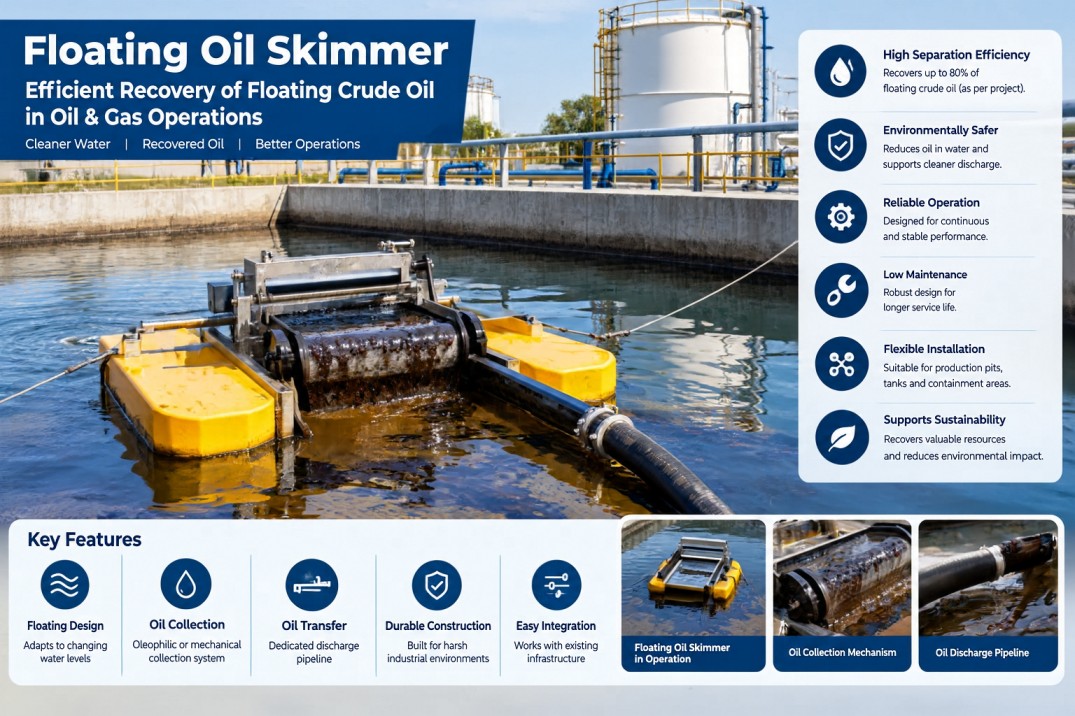
Today, oil-water separation is a top environmental and operational priority for industries everywhere. Whether it involves the wastewater from manufacturing processes, stormwater runoff, or contaminated water from industrial activity, implementation of the appropriate oil water separator, in conjunction with industrial skimmer systems, is the distinction between compliance and expensive noncompliance.
Understanding Oil Water Separation Fundamentals
Oil water separation relies on a simple principle; oil and water do not mix, due to differing densities. Oil will typically float on water because it has a lower specific gravity than water. Oil will always float to the surface, where it can more easily be removed. However, the world of industrial separation is much more complicated, and there are many factors that influence separation.
The effectiveness of your oil water separator will depend on critical factors such as: the type of oil and the viscosity of oil, water temperature, flow rates, and the influence of emulsifiers or surfactants that stabilize oil-water mixtures. Having an understanding of these factors will be vital to selecting the appropriate industrial skimmer system and using oil-water separation effectively.
Best Practices for Optimal Oil-Water Separation with Skimmers:
Achieving superior oil-water separation requires more than just installing a skimmer. It demands a holistic approach encompassing careful planning, strategic deployment, and diligent ongoing management.
The first step towards effective separation is understanding the specific characteristics of your oily water stream and the environment in which the skimmer will operate.
The positioning of the skimmer is paramount to its effectiveness. An ideally placed skimmer will maximize oil recovery while minimizing water intake.
A comprehensive and consistent maintenance schedule is critical for the longevity, reliability, and continuous efficiency of your industrial skimmer system.
The skimmer system is part of a larger treatment train. Its effectiveness is enhanced when integrated thoughtfully into the broader oil-water separation and waste management strategy.
Clearly Evidence-based Safety Protocols: Ensure that everyone involved in operating and maintaining the skimmer system is trained in the company's safety procedures, especially regarding corrosive or combustible materials, and electrical equipment in wet conditions. It is also to ensure that employees follow manufacturer's guidance on proper use and consideration of hazardous situations.
Conclusion
While peak performance of industrial skimmer systems for oil water separation is achieved through attention to design, implementation, and maintenance, it is important to follow some best practices and engage with ongoing technological developments that will help sustain efficient performance in an environmentally compliant, cost-efficient fashion.
In the end, the keys to oil water separation success through industrial skimmer systems are knowing the application, selecting the best technology, and providing detailed operational and maintenance procedures. Without ongoing monitoring and optimization, even oil water separation systems risk stagnation and losing effective performance over time.
Oil water separation is more than compliance. Responsible environmental stewardship should also be a priority while managing this process and seeking recoverable oil production revenues that can offset treatment costs. Industrial skimmer systems can be reliable and cost-effective approaches when properly implemented and managed to achieve oil water separation for both general and environmental engineers, and for a variety of applications.

Writer


Reach out to us
Share your requirement with us. Out team will respond promplty

Our Journey Started in 1996 as "Harsh Industrial Services" providing Industrial Pumping Solutions to major companies in Chemical and Pharmaceutical sector across the State of Gujarat.
© HIS Pumps 2026. All Rights Reserved. | Designed & Developed by : Webyou Technologies