24
Aug
2026
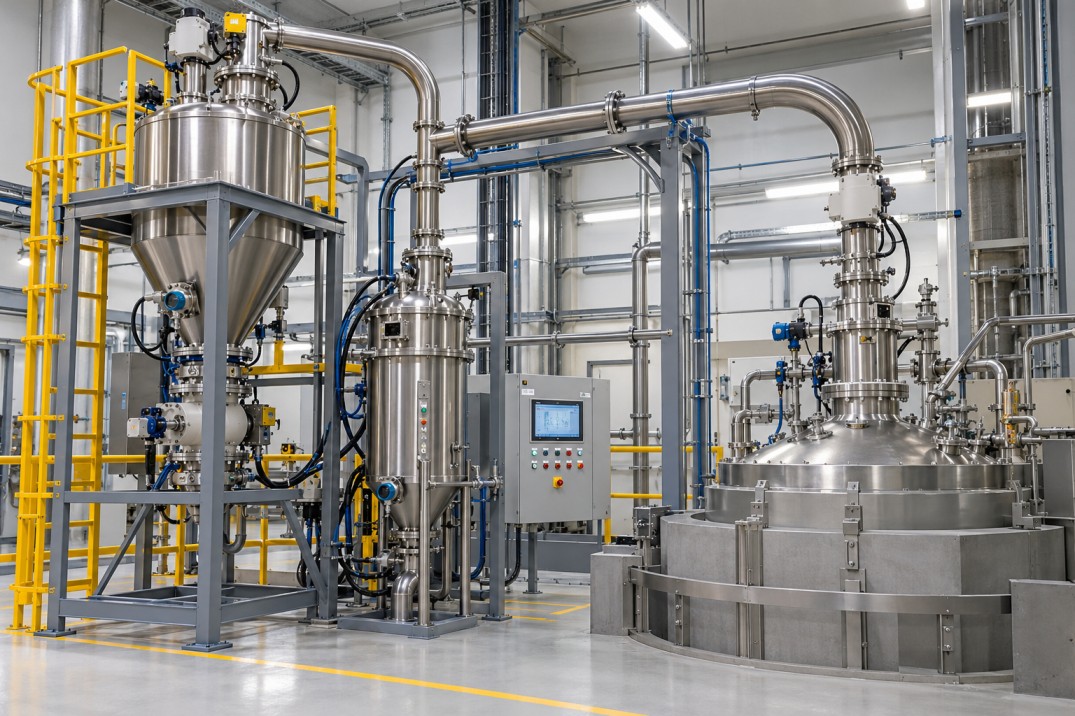
Transferring radioactive fuel into a nuclear reactor requires precise material handling, reliable containment, and carefully engineered safety measures. A conventional powder transfer system may not meet the demanding requirements of nuclear applications, where minimizing material leakage and protecting personnel are critical priorities.
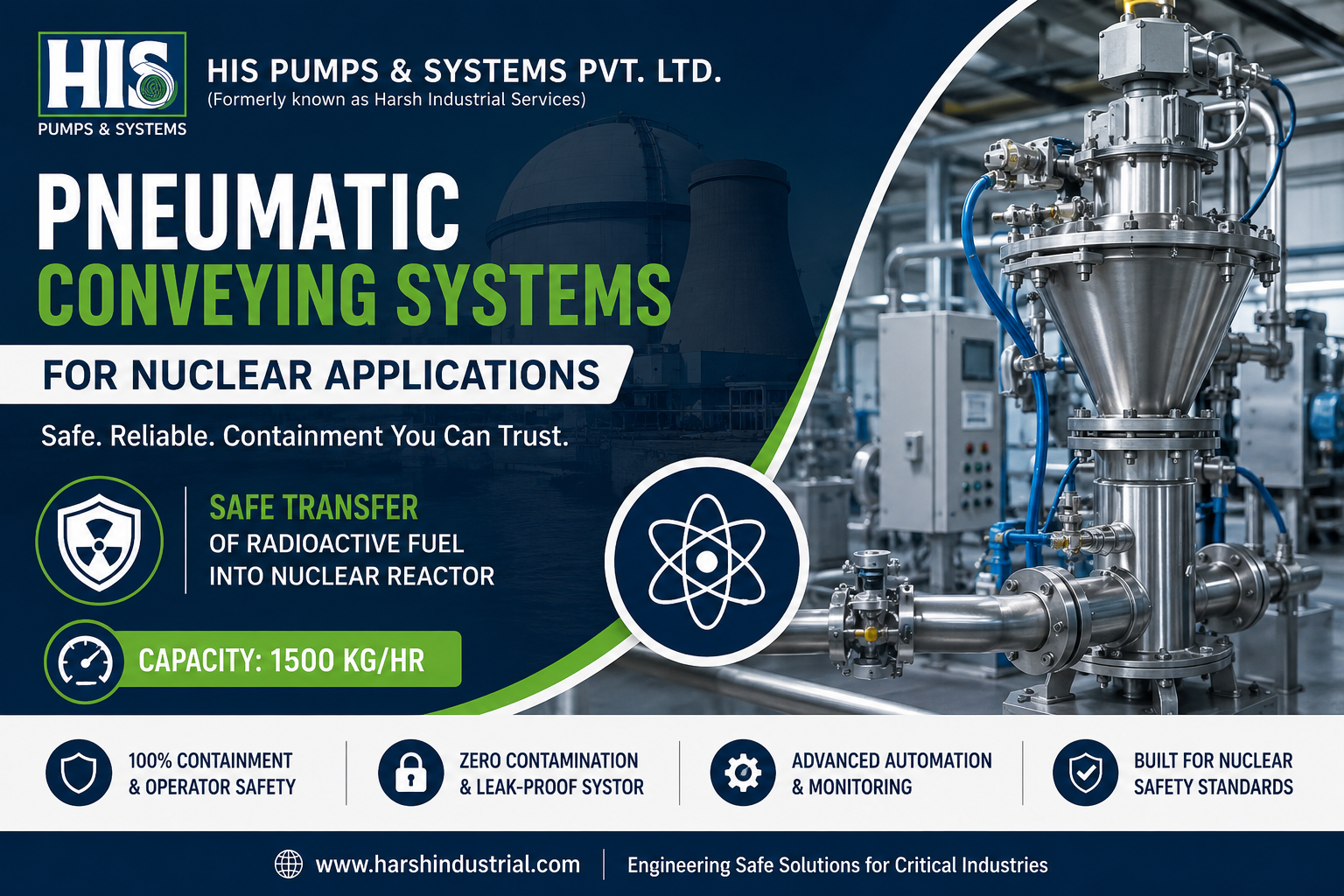
HIS Pumps & Systems provided a complete pneumatic conveying and powder transfer system designed to transfer radioactive material into a nuclear reactor at a capacity of 1,500 kg/hr. The solution was developed around the project's material transfer requirements, with a focus on controlled conveying, system integration, and safe handling.
This project demonstrates how specialized pneumatic conveying technology can support demanding material transfer applications in nuclear and other high-containment industrial environments.
A pneumatic conveying system transports powders, granules, or other suitable bulk solids through enclosed pipelines using a moving gas stream. Depending on the application, the system can operate using positive pressure or vacuum conveying principles.
In nuclear applications, pneumatic conveying can be considered for transferring suitable materials between process equipment while reducing the need for direct manual handling. However, the system must be engineered for the specific material, radiation environment, containment requirements, and reactor interface.
A nuclear-grade material transfer solution may require:
Enclosed material transfer pathways.
Engineered containment and leak prevention.
Controlled material feeding and discharge.
Compatible materials of construction.
Appropriate filtration and ventilation interfaces.
Monitoring, interlocks, and emergency shutdown provisions.
Maintenance procedures designed for the potential presence of radioactive contamination.
The final configuration must be determined through application-specific engineering and the facility's applicable nuclear safety requirements.
The customer required a reliable solution for transferring radioactive material into a nuclear reactor. This application presented a demanding material handling challenge because the transfer process needed to accommodate radioactive material while meeting the required throughput.
Unlike conventional powder handling, radioactive material transfer must account for the potential consequences of material escaping from the process boundary. Equipment selection, pipeline design, system interfaces, and operational controls therefore require careful evaluation.
The primary project requirements included:
1. Controlled material transfer
The system needed to facilitate the movement of radioactive material into the reactor through a dedicated powder transfer arrangement.
2. Required conveying capacity
The specified system capacity was 1,500 kg/hr, making throughput an important consideration in system design and performance evaluation.
3. Containment-focused handling
The transfer arrangement needed to support safe material handling through an appropriately engineered conveying system. Actual containment performance depends on the complete system design, validation, and operating procedures.
4. Integrated powder transfer equipment
Rather than relying on an isolated conveying component, the application called for a complete powder transfer system designed around the material transfer process.
HIS Pumps & Systems supplied a complete powder transfer system incorporating pneumatic conveying technology for the radioactive material transfer application.
The system was designed to facilitate the transfer of material into the nuclear reactor at the specified capacity of 1,500 kg/hr. The solution focused on integrating the material conveying process into a dedicated transfer arrangement suited to the application's requirements.
Key project highlights include:
Application: Radioactive material transfer into a nuclear reactor.
Industry: Nuclear application within the broader chemical and process engineering sector.
Technology: Pneumatic conveying.
Solution supplied: Complete powder transfer system.
Specified capacity: 1,500 kg/hr.
Primary objective: Controlled material transfer with safety-focused engineering considerations.
For radioactive service, the final system configuration, containment provisions, filtration arrangements, instrumentation, and safety interlocks must be verified against the facility's approved design requirements.
Pneumatic conveying can offer several advantages for suitable radioactive powders and bulk materials when the system is properly designed and qualified for the application.
Material travels through a pipeline rather than being moved through an open conveyor path. This can reduce opportunities for dust release and uncontrolled material exposure when the entire transfer boundary is appropriately sealed and maintained.
Pipelines can be routed between designated material loading points and process equipment. This flexibility can help integrate the transfer system into facilities with space restrictions or complex process layouts.
A suitably engineered system can incorporate feeding equipment, process instrumentation, and control logic to support repeatable material transfer. Actual feed-rate accuracy depends on material properties and the selected equipment configuration.
Automated or remotely operated transfer arrangements can reduce the need for direct operator involvement during routine material movement. The extent of remote operation depends on the facility layout and the system's control architecture.
Pneumatic conveying systems can be configured around different materials, process interfaces, and throughput requirements. For radioactive applications, this flexibility must be balanced against material compatibility, contamination control, and nuclear safety considerations.
Important: Pneumatic conveying alone does not guarantee radiation shielding, radioactive containment, or regulatory compliance. These outcomes depend on the complete engineered installation and its verified safety provisions.
Selecting a pneumatic conveying system for radioactive material requires more than calculating the required throughput. Engineers must assess the material characteristics, process conditions, containment strategy, and applicable safety requirements.
Particle size, bulk density, moisture content, flowability, abrasiveness, and chemical compatibility can affect conveying performance. These characteristics help determine the conveying method, pipeline configuration, and material-contact components.
The required throughput for this project was 1,500 kg/hr. Confirming performance at this capacity requires evaluating the material properties, conveying distance, pipeline geometry, operating conditions, and feeding and discharge arrangements.
The system boundary must be designed to control the release of potentially contaminated material. Depending on the application, engineered containment, suitable filtration, leak detection, and controlled exhaust arrangements may be required.
Contact surfaces, seals, valves, and other components must be selected for compatibility with the conveyed material and the operating environment. Radiation resistance and service-life requirements should be assessed where applicable.
Depending on the approved design, pressure monitoring, flow verification, process interlocks, fault detection, and emergency shutdown functions may be required. These measures must align with the facility's safety analysis and operating procedures.
Maintenance planning should address potential radioactive contamination, equipment accessibility, component replacement, and waste handling. Remote inspection or maintenance features may be appropriate where they reduce personnel exposure.
Parameter | Project Details |
|---|---|
Application | Radioactive material transfer into a nuclear reactor |
Industry | Nuclear / chemical process applications |
Equipment | Complete powder transfer system |
Conveying technology | Pneumatic conveying |
Required capacity | 1,500 kg/hr |
Supplier | HIS Pumps & Systems |
Main objective | Controlled material transfer with application-specific safety engineering |
The capacity listed above represents the specified project requirement. Other operating parameters, including conveying pressure, pipeline length, particle size, filtration efficiency, and verified containment performance, should be established from the approved technical documentation.
Industrial powder handling projects often require more than standard conveying equipment. The system must be selected and configured according to the material being handled, the required throughput, the installation environment, and the customer's process objectives.
HIS Pumps & Systems provides powder transfer and pneumatic conveying solutions for demanding industrial applications. Its work on this project involved supplying a complete transfer system for an application requiring a specified capacity of 1,500 kg/hr.
For projects involving hazardous or radioactive materials, customers should evaluate a supplier's application experience, engineering documentation, quality assurance processes, containment design, and ability to meet the facility's regulatory and technical requirements.
A detailed application assessment is essential before finalizing equipment selection or confirming suitability for nuclear service.
A pneumatic conveying system transports suitable powders or bulk solids through enclosed pipelines using air or another conveying gas. In nuclear applications, it may be used for material transfer where the design meets the facility's containment and safety requirements.
The HIS Pumps & Systems project specified a conveying capacity of 1,500 kg/hr for transferring radioactive material into a nuclear reactor.
They can be engineered for suitable radioactive material handling applications, but safety depends on the complete system design, containment verification, filtration, instrumentation, operating procedures, and applicable regulatory approvals. Pneumatic conveying by itself does not guarantee safe radioactive material containment.
Important factors include particle size, bulk density, flowability, abrasiveness, required throughput, conveying distance, pipeline routing, operating pressure, containment requirements, and the material's chemical and radiological characteristics.
Depending on the application, requirements may include sealed transfer boundaries, secondary containment, appropriate filtration, leak detection, process interlocks, remote operation, shielding, radiation monitoring, and controlled maintenance procedures. The approved nuclear safety design determines which provisions are necessary.
HIS Pumps & Systems supplies powder transfer and pneumatic conveying solutions for industrial applications. Specific equipment configurations, performance guarantees, and suitability for radioactive service should be confirmed with the company's engineering team for each project.
Radioactive material transfer into a nuclear reactor presents specialized engineering challenges involving throughput, process integration, containment, and operational safety.
For this application, HIS Pumps & Systems supplied a complete pneumatic conveying and powder transfer system designed around a specified capacity of 1,500 kg/hr. The project illustrates the role of application-specific conveying equipment in demanding material handling environments.
For organizations evaluating pneumatic conveying systems for nuclear, chemical, or other high-containment applications, a detailed engineering assessment is essential to establish the appropriate system configuration and verify that all relevant safety and performance requirements are met.
Looking for a pneumatic conveying or powder transfer solution for a demanding industrial application? Contact HIS Pumps & Systems to discuss your material characteristics, required capacity, process conditions, and system integration requirements.

Writer


Reach out to us
Share your requirement with us. Out team will respond promplty

Our Journey Started in 1996 as "Harsh Industrial Services" providing Industrial Pumping Solutions to major companies in Chemical and Pharmaceutical sector across the State of Gujarat.
© HIS Pumps 2026. All Rights Reserved. | Designed & Developed by : Webyou Technologies